



Finding comfortable shoes with bunions can be challenging, especially when shoes place pressure directly on sensitive areas of the foot.
Tight toe boxes, rigid materials, excessive seams, and narrow fits can all increase irritation and discomfort around the bunion area. The right footwear can help reduce pressure, improve comfort, and make everyday movement feel much more manageable.
At Footgear, our team regularly helps customers find bunion-friendly shoes that feel supportive, comfortable, and practical for everyday wear. We’ve pulled together a range of styles and brands that are often popular amongst customers looking for extra room, softer materials, and supportive construction.
A bunion is a bony prominence that develops around the joint at the base of the big toe. Over time, the big toe may gradually shift inward towards the other toes, creating pressure and discomfort around the joint.
Some people experience:
As bunions can make feet more sensitive to pressure and rubbing, shoe fit becomes especially important.
A wider toe box allows the toes to sit more naturally without excessive crowding or pressure around the bunion area. Shoes that taper too heavily through the forefoot can increase irritation and discomfort.
Soft leather, knit, mesh, and flexible uppers are often more comfortable for bunions as they can adapt more gently to the shape of the foot. Rigid materials or heavy stitching directly across the bunion area can create unnecessary pressure.
Supportive cushioning can help improve overall comfort and reduce impact through the foot during walking and standing. Many people with bunions find supportive sneakers and cushioned sandals more comfortable than completely flat shoes.
Adjustable features allow for a more customised fit and can help reduce pressure across sensitive areas of the foot. Lace-up sneakers and adjustable sandals are often popular choices because they allow flexibility through different parts of the foot.
Very high heels place additional pressure through the forefoot and big toe joint. Many customers with bunions prefer styles with lower heel heights and more stable support underfoot.
One of the most common issues with bunions is pressure or rubbing directly against the affected area. Styles with softer uppers, minimal stitching, and extra room through the forefoot are often more comfortable and help reduce irritation.
Shoes that feel tight across the ball of the foot can make bunions feel more painful throughout the day. Wide fit styles, adjustable sandals, and sneakers with roomier toe boxes are often more accommodating.
While softness is important, support matters too. Very flat or unsupportive shoes may not provide enough cushioning or stability for all-day comfort, especially if you spend long hours on your feet. Supportive soles, cushioned footbeds, and structured sneakers are often preferred for everyday wear.
Supportive sneakers are often one of the most popular options for bunions thanks to their cushioning, softer uppers, and adjustable fit. Supportive sandals can also work well, particularly styles with adjustable straps that allow extra flexibility through the forefoot.
At Footgear, brands like On Running, Frankie4, ECCO, Ziera, and Revere are often favourites amongst customers looking for bunion friendly footwear.
We generally recommend trying shoes on later in the day when feet are naturally a little more swollen, particularly if your bunions become more sensitive throughout the day.
When trying on shoes, pay attention to:
Shoes should feel comfortable from the start without relying on them to stretch significantly over time.
If you wear orthotics, it’s also a good idea to try shoes on with them inserted to make sure the fit still feels supportive and comfortable. As always, we recommend trying your shoes indoors first before wearing them outside.
We know that every bunion and foot shape is different, which is why comfort can vary significantly between brands and styles.
If you’re unsure where to start, we’re always happy to help guide you towards styles that may work well for your feet and lifestyle.
What Shoes Are Best For Bunions?
Shoes with wider toe boxes, soft uppers, cushioning, and adjustable fits are often preferred for bunions.
Are Tight Shoes Bad For Bunions?
Shoes that place excessive pressure across the bunion area can sometimes increase irritation and discomfort.
Are Sneakers Good For Bunions?
Supportive sneakers are often one of the most popular choices thanks to their cushioning, softer materials, and adjustable fit.
Should Bunions Be In Tight Or Loose Shoes?
Your shoes should feel secure and supportive without creating pressure or rubbing around the bunion area.
Can Orthotics Help With Bunions?
Some people benefit from orthotics for additional support and pressure distribution. If you are unsure, it’s always best to speak with your podiatrist or healthcare professional.
If you have bunions or ongoing foot pain, we always recommend speaking with your healthcare professional for personalised advice about the type of footwear that may work best for your feet and lifestyle. We also recommend trialling your new shoes indoors on a clean surface first to make sure you’re happy with the fit before wearing them out and about.





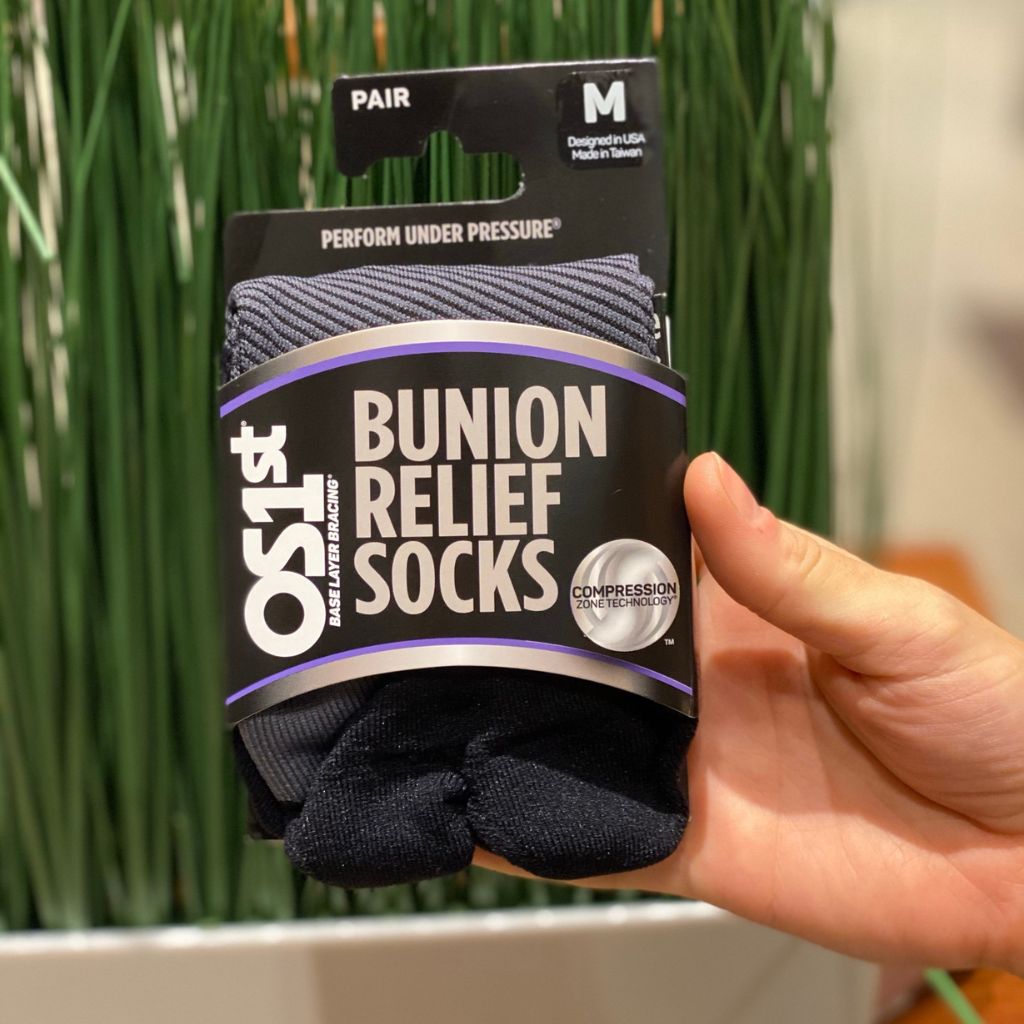
Try a pair of OS1st Bunion Relief socks!
This first of its kind design, provides seamless comfort with a split toe design and targeted bunion pad to create wearable bunion relief, any time of day and during activity.